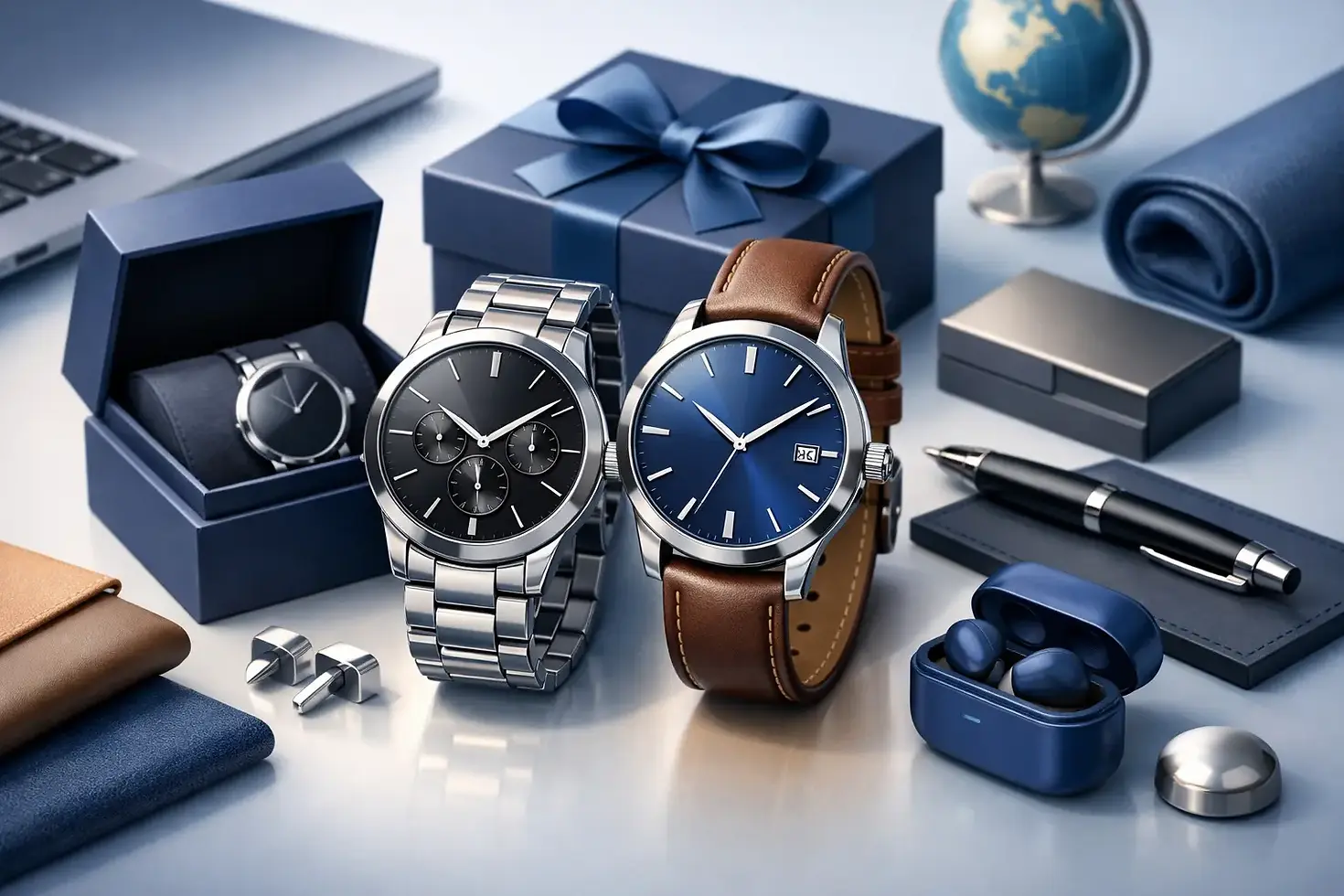
Branded Corporate Gift Watches That Work
- WILSON LEUNG
- Jun 13
- 6 min read
A corporate gift watch gets judged in seconds. Weight, finish, dial clarity, strap feel, and packaging all signal whether the giver values quality or simply needed to fill a budget line. That is why branded corporate gift watches deserve more planning than most promotional products. When done well, they carry a company name without looking like an afterthought, and they stay in use long after other gifts are forgotten.
For business buyers, the real question is not whether a watch can be branded. Almost any watch can. The question is whether the product supports the purpose behind the gift. A recognition program, a distributor incentive, a client anniversary piece, and a retail-ready branded giveaway all require different decisions on design, specification, and production. Treating them as the same project usually leads to average results.
Why branded corporate gift watches still matter
Most corporate gifts have a short life. Food is consumed, tech accessories get replaced, and low-cost merchandise often ends up unused. A watch is different because it has lasting utility and perceived value. It is also close to the wearer. That makes it a stronger brand carrier, but it also raises the standard. If the watch feels cheap, the brand impression drops with it.
For employee recognition, watches carry a sense of milestone and permanence that generic gifts rarely match. For customer relationships, they signal effort and selectivity. For brands entering the accessory space, they can also work as a bridge product - part gift, part market test, part branded merchandise.
That said, the category is not automatic. A watch is a better fit when the recipient values presentation, daily use, or commemorative meaning. If the audience is highly price-sensitive or the gift is intended for mass event distribution, another product may serve better. Good sourcing starts with being honest about the objective.
What separates effective branded corporate gift watches from generic promo items
The difference usually comes down to restraint. The strongest corporate gift watches are branded with control, not excess. A subtle logo on the dial, an engraved case back, custom packaging, or a branded crown can carry the identity without making the watch look like advertising.
Overbranding is one of the most common mistakes in this category. Large logos, crowded dial text, and too many brand elements can reduce perceived quality. Recipients are more likely to wear a watch that feels like a legitimate product rather than a promotional device.
Material choices matter just as much. Case plating, crystal quality, movement selection, strap construction, and buckle finish all shape the user experience. On paper, two watches may look similar. In hand, one can feel stable and refined while the other feels disposable. For a gift tied to your company name, that difference matters.
Packaging should also be part of the product plan, not an afterthought. A solid presentation box, clean insert card, and well-finished exterior can elevate the entire program. In many corporate gifting situations, the unboxing moment carries nearly as much weight as the watch itself.
Choosing the right watch style for the audience
The safest assumption in corporate gifting is that broad appeal wins. Clean dials, modest case sizes, neutral colors, and practical strap options generally perform better than trend-driven designs. A gift watch should be wearable across different roles, ages, and settings.
For executive gifting, a dress-oriented design with a slim profile, polished case, and leather strap is often the right direction. It communicates formality and value without trying too hard. For employee service awards or broad company recognition programs, a simple everyday watch with stainless steel construction and clear legibility is usually more effective.
If the program targets a younger consumer-facing audience, a casual sport design may fit better. Even then, balance matters. Strong branding can work in a fashion-led watch, but only if the product still feels coherent.
There is no single best format. The right answer depends on who will wear the watch, where they will wear it, and whether the gift is intended to feel commemorative, premium, or practical.
OEM and ODM decisions shape the final result
This is where many buyers either protect the project or create avoidable risk. If you need a fully branded watch aligned to an existing concept, OEM development provides more control over design details, materials, branding placement, and packaging. It is the right path when brand identity is specific and the watch needs to feel unique.
If speed, budget, or lower development complexity matters more, an ODM route can be more efficient. In that case, the base watch architecture already exists, and customization focuses on logos, colors, straps, case back engraving, and packaging. For many corporate gift programs, this is the practical choice because it shortens timelines and reduces engineering risk.
Neither approach is automatically better. OEM suits brands that want differentiation and are prepared to invest in development. ODM suits buyers who need dependable execution on a proven format. The key is choosing a manufacturing path that matches the business objective, not chasing customization for its own sake.
Production details buyers should check early
A watch project can look straightforward until sample review begins. Then the small issues appear - logo size on the dial is off, plating tone does not match brand expectations, strap texture feels too soft, or packaging dimensions create shipping problems. Most delays happen because these points were not defined early enough.
Clear specifications reduce that risk. Buyers should align on movement type, water resistance target, case material, dial finish, index style, branding method, strap material, buckle details, and packaging standards before bulk production. Sample approval should not be treated as a formality. It is the point where design intent meets manufacturing reality.
Compliance and quality control should also be part of the discussion from the start. Corporate gifting programs often have fixed launch dates tied to events, seasonal campaigns, or internal recognition milestones. A supplier that can manage development, production consistency, and final inspection with discipline is worth more than a lower quote that creates uncertainty later.
This is why experienced manufacturing support matters. A capable OEM/ODM partner does more than produce watches. The right partner identifies potential problems before they become production losses.
Cost matters, but cheap usually shows
Corporate buyers often work within strict budgets. That is normal. The issue is not cost control. The issue is forcing the product below the point where it can still represent the brand properly.
With branded corporate gift watches, the visible shortcuts are easy to spot. Thin plating, weak strap hardware, light cases, inconsistent printing, and poor packaging quickly lower the perceived value. A buyer may save on unit cost and lose on impact.
A better approach is to prioritize the features recipients notice most. If the budget is tight, keep the design clean and reduce unnecessary complexity. It is often smarter to produce a simpler, well-made watch than a more ambitious design executed at a lower standard.
Volume also changes the equation. Larger runs can support better customization and more efficient per-unit costs, while smaller runs may need tighter specification control to stay commercially practical. This is another reason early planning matters. Design, quantity, and delivery timing are linked.
When a watch is the right corporate gift
A watch makes sense when the brand wants to communicate appreciation, durability, and quality. It works well for leadership awards, long-service recognition, partner gifts, company anniversaries, dealer programs, and branded merchandise with higher perceived value.
It is less effective when the campaign is built around impulse distribution or very short-term promotional exposure. In those cases, a watch may be too considered a product for the objective. The strongest gift programs respect the product category instead of forcing it into the wrong use case.
For companies that want a reliable route into this category, working with a specialist manufacturer is usually the deciding factor. A professional watch manufacturer with OEM and ODM experience can help align design direction, production feasibility, and quality expectations before mistakes become expensive. That is especially important for buyers who want custom results without building internal watch development capability. HONOUR TIME CORPORATION LTD. works in exactly that space.
The best corporate gift is not the one with the biggest logo or the lowest cost. It is the one recipients keep, wear, and quietly associate with a company that pays attention to details.


Comments