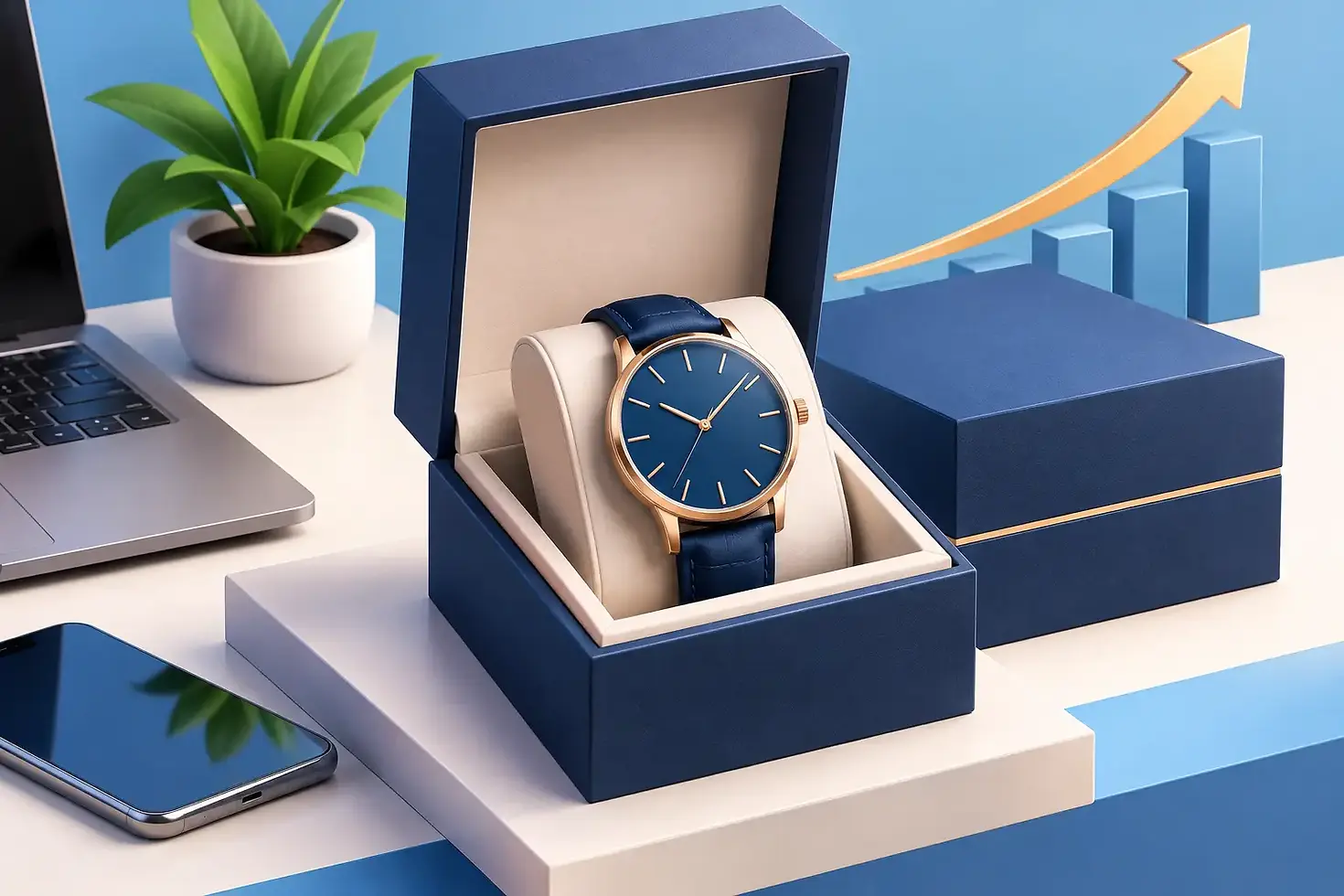
A Private Label Watch Launch Example That Works
A watch launch can fail long before the first unit reaches a customer. The problem is rarely just the design. It is usually an unclear product brief, an unrealistic target cost, late material changes, or a supplier relationship that treats production as a transaction instead of a controlled process. This private label watch launch example shows how a US accessories brand can move from concept to a retail-ready collection with clear decisions at every stage.
The example is representative rather than a single client project. It reflects the practical work required to develop a branded watch through an experienced OEM/ODM manufacturing partner.
A Private Label Watch Launch Example: The Starting Brief
A mid-sized US fashion accessories company wants to add watches to its existing product range. Its customers already buy leather goods and gift items, so the brand is not trying to compete with luxury Swiss watchmakers. It needs a dependable, attractive watch priced for department-store and online retail, with enough brand detail to look intentional rather than generic.
The initial objective is a three-style collection for a fall launch: a black dial model on a leather strap, a silver dial model with a stainless steel mesh bracelet, and a warm gold-tone version positioned as a gifting item. The planned retail price is $95 to $125. Based on the intended margin, packaging, freight, and selling costs, the target ex-factory cost must remain within a defined range.
That cost target changes the product conversation immediately. A 316L stainless steel case, mineral glass, reliable Japanese movement options, custom dial printing, and a branded caseback may fit the plan. A highly complex multi-layer dial, sapphire crystal, custom-made bracelet links, and multiple complications may not. Good private label development is not about saying yes to every idea. It is about matching the specification to the commercial purpose.
Before design begins, the manufacturer and buyer should confirm the essential product parameters: intended retail channel, target consumer, order quantity, retail price, target delivery date, preferred case size, water resistance requirement, movement type, strap materials, packaging, and compliance needs. A clear brief prevents expensive assumptions later.
Defining What Makes the Watch Belong to the Brand
For this launch, the brand chooses a 40 mm round case to suit a broad unisex audience. The case uses a polished bezel with brushed side surfaces, creating visible contrast without adding excessive machining cost. The dial is clean and legible, with applied indexes at the quarter hours and printed markers elsewhere. The logo appears at 12 o'clock, while the caseback carries a short brand statement and model reference.
The distinction comes from a coordinated set of details rather than one dramatic feature. The dial colors match the company's leather accessory palette. The crown is engraved with a small logo. The leather straps use selected stitching colors, and the packaging includes a branded insert card explaining the collection. Each choice supports recognition at retail.
This is where the difference between private label and full custom development matters. A private label project may begin from an existing case platform, movement layout, or strap construction, then add brand-specific elements. This usually improves speed, reduces development risk, and supports a more manageable minimum order quantity. A fully custom case or bracelet can create stronger exclusivity, but it requires tooling, more engineering review, longer lead times, and a higher investment.
Neither path is automatically better. For a first collection, an existing case platform with purposeful customization is often the stronger commercial decision. For an established watch brand with higher projected volume, custom tooling may be justified.
Sampling Turns Specifications Into Decisions
The buyer provides a brand guide, logo files, color references, and initial packaging direction. The manufacturer converts these materials into artwork and technical specifications. At this stage, details that look minor on a screen become important: logo line thickness, dial print position, index alignment, hand length, date-window placement, strap taper, buckle finish, and the exact shade of plating.
A pre-production sample is then prepared. The sample is not simply a presentation piece. It is a decision tool. The buyer evaluates whether the gold tone is correct under normal lighting, whether the mesh bracelet feels substantial, whether the logo remains legible at a small scale, and whether the watch sits properly on the wrist.
In this example, the first sample exposes two issues. The black dial absorbs too much light and makes the printed minute track difficult to read. The leather strap is also stiffer than expected for a fashion-focused product. The buyer and manufacturer revise the dial to a subtle sunray finish and select a softer strap construction with improved lining material.
These changes are manageable because they occur before bulk production. Changing a dial finish or strap specification after components have been ordered can create delays, unused material, and cost pressure. Sample approval should therefore be formal. The approved sample, final artwork, bill of materials, and quality requirements become the production reference.
Production Planning Is More Than Placing an Order
Once the sample is approved, production planning begins. Components must arrive in the correct sequence: cases, dials, hands, movements, crystals, straps, buckles, packaging, and printed materials. A missed detail can affect the entire schedule. For example, branded packaging that arrives late may hold finished watches even when assembly is complete.
For the three-style launch, the buyer places an initial order of 1,200 watches, divided across the colorways according to anticipated demand. The black leather version receives the highest quantity because it is expected to be the year-round core item. The gold-tone version has a lower quantity because plating color and seasonal demand carry more uncertainty.
A reliable manufacturing plan also identifies decisions that cannot be changed late without consequence. These typically include case finish, movement selection, dial tooling or applied index specifications, strap construction, and packaging dimensions. The buyer retains flexibility where it is practical, such as final carton markings or insert-card copy, while locking the components that drive assembly and procurement.
Clear communication matters as much as the schedule itself. The buyer should receive confirmation of approved specifications, production milestones, inspection timing, packing method, and expected shipment readiness. A professional supplier does not leave critical details to informal messages or memory.
Quality Control Protects the Brand at Retail
A watch is a small product with many visible and functional points of failure. A dial marker that is slightly misaligned, a hand that contacts the crystal, a scratched caseback, or a loose buckle can damage customer confidence quickly. Quality control must address both appearance and performance.
For this collection, inspection standards include cosmetic checks for cases, crystals, dials, hands, straps, and packaging. Functional checks cover movement operation, hand alignment, crown operation, date function where applicable, and water-resistance testing according to the agreed specification. The watches are also checked against the approved sample, because quality is not only about whether a product works. It is about whether it matches the product the buyer approved.
Water resistance deserves careful wording and testing. A 3 ATM watch may be suitable for everyday splashes but is not intended for swimming. A brand should align its marketing claims, user instructions, and product design with the actual test standard. Overstating performance can create avoidable returns and reputational damage.
The same discipline applies to plating, leather, and packaging. Gold-tone finishes should be assessed for consistent appearance. Leather straps should be checked for stitching, edge finishing, and logo application. Packaging should protect the watch through freight and warehouse handling, not just look good in product photography.
Retail Readiness Extends Beyond the Finished Watch
The watches are packed with hangtags, instruction materials, warranty information, and individual protective packaging. Outer cartons are marked for warehouse receiving and inventory control. Before shipment, the buyer confirms product codes, color descriptions, country-of-origin markings, and the information needed by retail partners.
The brand also prepares product photography and sales copy from the approved production version rather than early prototypes. This avoids a common mismatch: marketing shows one strap color, dial texture, or clasp while customers receive another. Product details should state case size, materials, movement type, water-resistance rating, and care guidance clearly.
After delivery, the launch provides useful data. The black leather model sells fastest online, while the mesh bracelet version performs better in physical retail where customers can feel its weight and finish. The gold-tone model sells strongly during gifting periods but more slowly afterward. Those results guide the next order rather than being treated as a simple success-or-failure judgment.
For a second production run, the brand may increase the black dial quantity, add a smaller case size, and refine the gold-tone color based on customer feedback. This is how a private label watch collection becomes a durable product program: measured development, controlled production, and improvements based on real market response.
A capable manufacturing partner should make this process clearer, not more complicated. Honour Time Corporation works with buyers who need dependable OEM/ODM watch production, from specification and sampling through inspection and delivery. The strongest launch starts with a brief that can be manufactured consistently, sold confidently, and improved intelligently after the first customer wears it.


Comments