Custom Watch Strap Materials That Fit the Product
- WILSON LEUNG
- Apr 22
- 6 min read
A watch can have the right case, movement, and dial layout and still miss the market if the strap is wrong. In OEM and ODM development, custom watch strap materials are not a finishing detail. They affect comfort, durability, retail positioning, compliance, cost, and how the customer judges quality the moment the watch is handled.
For brand owners and product teams, strap material selection should be treated as a product decision, not just a styling choice. The right material supports the category you are building, whether that is fashion, sports, gifting, retail, or promotional. The wrong material creates returns, weakens perceived value, or forces compromises later in production.
How custom watch strap materials shape the final product
Strap material changes more than appearance. It influences weight on the wrist, resistance to sweat and moisture, color stability, stitching options, hardware compatibility, and long-term wear performance. It also affects how a watch photographs, how it feels in packaging, and whether the product aligns with the end market's expectations.
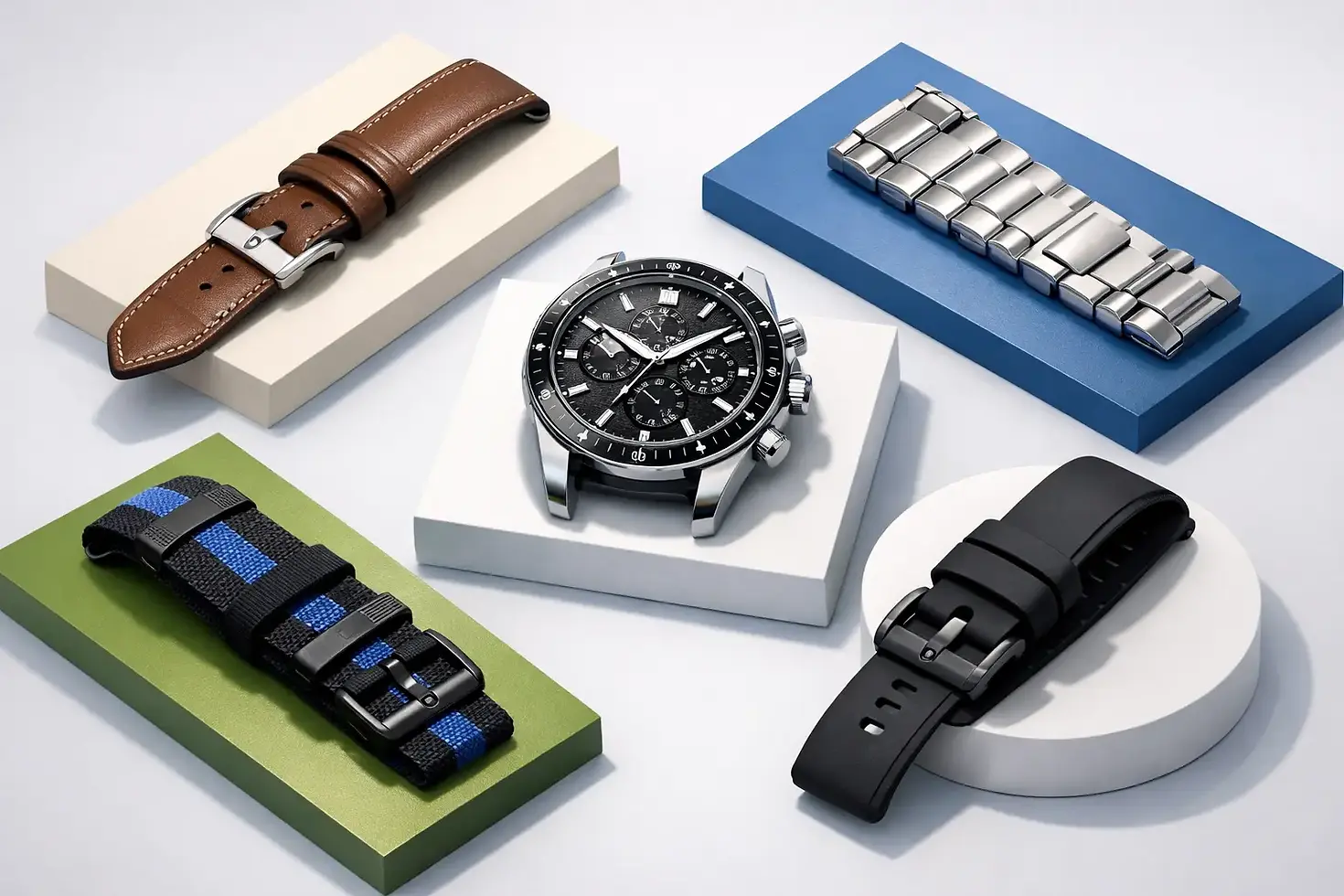
This is why material choice should be discussed early in development. If a brand wants a premium dress watch at a reachable price point, genuine leather may work well. If the product is meant for active daily wear, silicone or FKM rubber may make more sense. If the goal is a more substantial and durable feel, stainless steel can support that position. Each option has advantages, but each also comes with trade-offs that matter in production.
Leather remains the standard for classic positioning
Leather is still one of the most requested strap materials because it gives a watch an immediate sense of familiarity and value. It works especially well for dress styles, minimalist fashion watches, and gift-oriented products. Genuine leather offers a broad range of finishes, textures, embossing patterns, edge treatments, and lining constructions, which makes it flexible for private-label development.
That said, leather is not one material in practical terms. Full-grain, top-grain, split leather, suede finishes, and embossed variants all perform differently. The same applies to the lining and padding structure. A clean-looking leather strap can feel premium at first but lose shape quickly if the internal construction is weak.
Leather also has environmental and usage limitations. It does not perform as well under repeated sweat exposure, water contact, or humid conditions. For brands selling into warmer climates or targeting active users, that matters. If the visual language calls for leather but the use case is casual sport, it may be better to consider hybrid construction or a different category entirely.
Silicone and rubber for sport, comfort, and modern retail
Silicone has become common in fashion sport watches, promotional products, and accessible price-point collections. It is soft, flexible, easy to color-match, and generally comfortable for daily wear. For OEM projects, silicone also supports a wide range of brand treatments, including molded logos, custom textures, perforations, and integrated strap designs.
Its strengths are practical. It handles moisture better than leather, it is easier to clean, and it suits casual and active styling. For younger consumer segments or watches intended for everyday convenience, silicone can be the right answer.
Still, not all silicone straps are equal. Lower-grade material can attract dust, feel overly soft, or lack the surface finish needed for a stronger retail presentation. FKM rubber is often the better option when a project needs improved durability, chemical resistance, and a more refined touch. It usually costs more, but the upgrade can be justified for higher-positioned sport models.
This is a common case where the answer depends on the product tier. Standard silicone can be effective for value-driven programs. FKM rubber is more suitable when the watch needs stronger performance and a better hand feel.
Stainless steel supports weight, value, and longevity
Metal bracelets, especially stainless steel, are often selected for watches that need a more substantial and permanent feel. They support a broad range of product categories, from business watches to fashion chronographs and mid-market retail collections. A well-made steel bracelet can significantly raise perceived value.
From a manufacturing standpoint, steel introduces different considerations than soft straps. Link design, finishing consistency, clasp performance, coating quality, and sizing all affect the final result. The bracelet must also match the case finish closely. A mismatch between brushed and polished surfaces, or between case and bracelet tone, is easy for buyers to notice.
Steel works well when durability and visual impact matter, but it also adds weight and complexity. It generally increases assembly requirements, shipping weight, and fit considerations for end users. For some brands, that is a benefit because the heavier feel communicates quality. For others, especially where comfort and low-profile wear are priorities, it may not be the best choice.
Nylon and fabric straps for versatility and value
Nylon and other woven fabric straps are practical options for casual, military-inspired, outdoor, and seasonal programs. They are lightweight, relatively cost-effective, and easy to adapt through color, stripe patterns, stitching, and branded hardware. They also allow quick visual differentiation across a collection without major case changes.
For promotional and fashion-driven projects, nylon can be an efficient way to create multiple SKUs from one watch platform. This helps brands expand assortment while keeping tooling and production manageable.
The trade-off is positioning. Fabric straps rarely create the same premium impression as leather or steel unless the design concept clearly supports them. They can also fray, absorb moisture, or feel less refined if the weave and finishing are not controlled well. In lower-end executions, the difference is obvious.
PU, vegan alternatives, and cost-sensitive development
Some projects require a leather look at a lower cost or need an animal-free positioning. In those cases, PU and other synthetic alternatives can be useful. They offer visual flexibility, simpler consistency across batches, and lower material costs in many applications.
For large-volume programs, synthetics can support price targets that genuine leather cannot. They also make it easier to maintain a uniform appearance from one production run to the next, which matters in retail programs with strict visual standards.
The limitation is long-term wear. Depending on the grade and coating, synthetic straps may crack, peel, or age less gracefully than better leather constructions. If the watch is intended as a short-cycle fashion item or promotional product, that may be acceptable. If the brand is building a reputation around durability, material selection should be more cautious.
Matching strap material to the sales channel
One of the most common mistakes in watch development is choosing a strap based only on design preference. Material should match the sales environment. Department store retail, online direct-to-consumer sales, corporate gifting, and promotional distribution all place different demands on the product.
For example, online buyers often judge quality first through images and then through first-touch experience after delivery. Leather grain, steel finishing, and silicone surface texture all matter. In promotional channels, cost control and broad wearability may take priority over long-term collector appeal. In fashion retail, the strap often carries a large share of the product's visual identity.
This is where manufacturing guidance matters. A strap that looks strong in a concept drawing may not support the target margin, usage conditions, or packaging plan. An experienced OEM and ODM partner should help narrow options based on the actual business case, not only aesthetics.
Custom watch strap materials and production feasibility
Material selection also affects lead time, tooling, MOQ structure, and quality control. Custom molds for rubber or silicone straps may require upfront development. Steel bracelets introduce more component-level inspection points. Leather straps depend on cutting accuracy, edge finishing, stitch consistency, and hardware attachment quality.
This means the best material is not always the one with the best appearance on paper. It is the one that can be produced consistently at the required quality level, within the target budget, and at the expected order volume.
For B2B buyers, consistency matters as much as design. If a watch line scales successfully, the strap material must remain stable across repeat orders. That includes color matching, texture control, dimensional accuracy, and wear performance. Reliable manufacturing is what turns a good sample into a sustainable product line.
HONOUR TIME CORPORATION LTD. works with this reality every day. Material decisions are strongest when they are made with production, quality control, and market positioning considered together.
What buyers should decide before approving a strap
Before final approval, it helps to answer a few practical questions. What price point must the watch hit? Where will it be sold? How will the end customer wear it - daily office use, fashion rotation, sport, gifting, or promotion? Is first impression more important, or is long-term wear the priority? And does the strap need to support multiple colorways or fast assortment changes?
Those answers usually narrow the field quickly. A dress-oriented private-label watch may call for leather with upgraded lining and buckle finishing. A summer fashion capsule may perform better with silicone. A core retail style may justify stainless steel for stronger perceived value. A promotional launch may need nylon or synthetic material for flexibility and cost control.
The best strap material is the one that fits the product honestly. When material, price point, and market position line up, the watch feels right before a customer ever checks the movement. That is usually where a good watch program starts to separate itself from an average one.


Comments