Watch Customization for OEM and ODM Brands
- WILSON LEUNG
- 7 hours ago
- 6 min read
A watch line rarely succeeds because of one good sketch. It succeeds when design intent, component selection, production control, and quality standards all stay aligned from sample to shipment. That is why watch customization matters for brands entering private label, retail, promotional, or licensed product markets. Done well, it gives a business real product distinction without adding unnecessary manufacturing risk.
For B2B buyers, customization is not only about changing a logo on the dial. It is a product development decision that affects positioning, cost structure, lead time, compliance, and long-term brand consistency. A reliable manufacturing partner should be able to translate commercial goals into practical watch specifications, then produce them with repeatable quality.
What watch customization really means
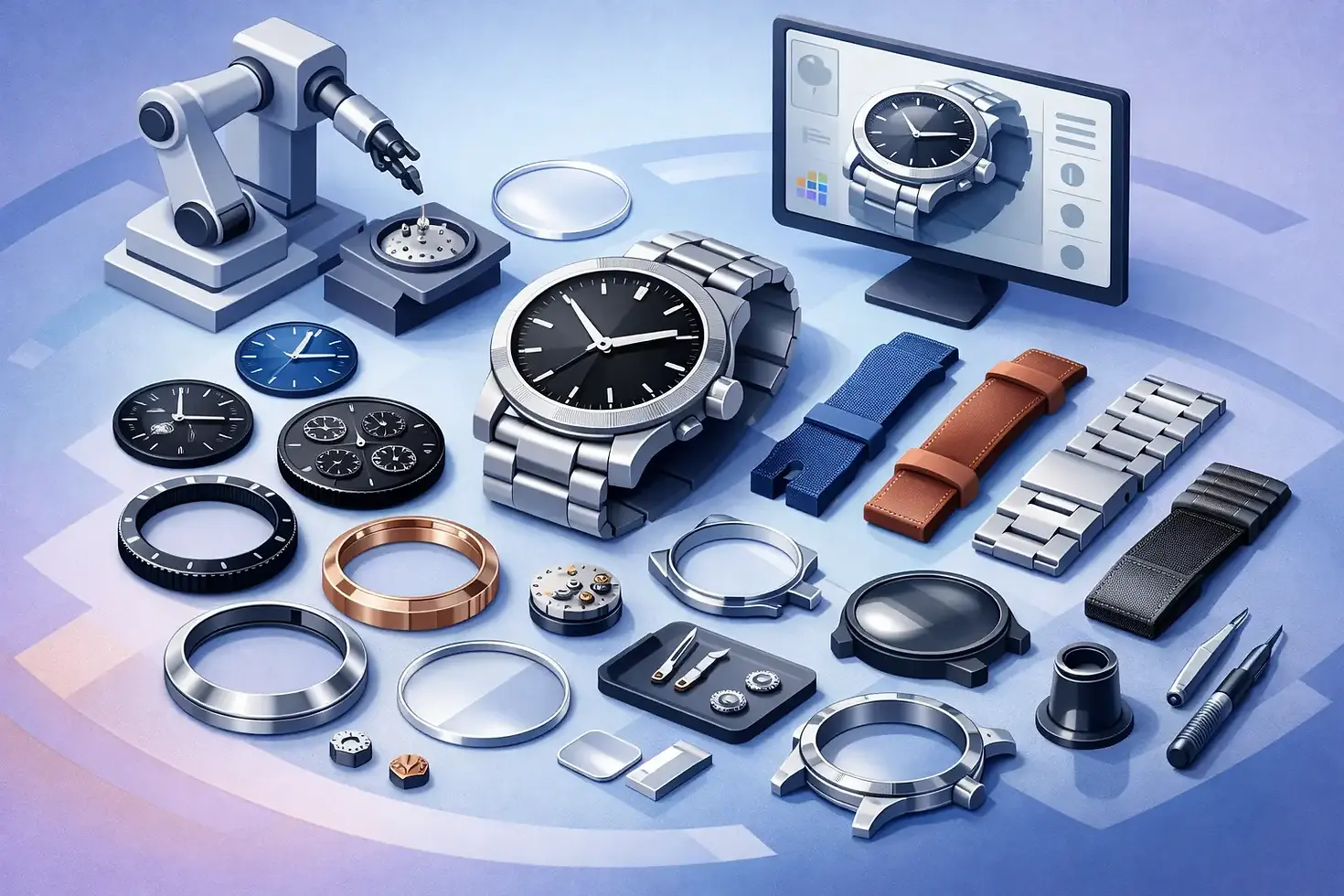
In manufacturing terms, watch customization covers every element that can be defined, adjusted, or developed to match a brand's market objective. That may start with visible features such as case shape, dial layout, hands, straps, color finishes, and packaging. It also includes less visible but equally important factors such as movement type, water resistance target, material selection, plating standards, assembly tolerances, and inspection requirements.
Some buyers need a fully original product direction. Others need an efficient private-label route based on proven structures with selected modifications. Both are valid. The right approach depends on price point, timeline, order volume, and how much design exclusivity the brand actually needs.
This is where OEM and ODM paths become important. OEM projects usually follow a buyer's product concept more closely, with stronger control over appearance and specification. ODM projects typically begin with existing development platforms that can be adapted faster and more efficiently. Neither model is automatically better. The decision should match the product strategy.
Why watch customization matters for brand development
A branded watch is often judged in seconds. Buyers notice proportion, dial balance, finish quality, strap feel, and packaging before they evaluate technical details. If those first impressions are inconsistent, the product feels generic even when the branding is correct.
Customization helps solve that problem by creating a watch that fits the intended customer, sales channel, and retail price. A fashion brand may need strong visual identity and seasonal flexibility. A promotional buyer may prioritize cost control, branding area, and dependable delivery. A distributor may want proven models with selective changes to reduce risk while still offering differentiation.
The commercial advantage is clear. A custom watch can support margin, improve brand recognition, and reduce direct price comparison against standard off-the-shelf products. At the same time, more customization usually brings more development work. That means brands need to balance uniqueness against speed and production efficiency.
Watch customization options that affect the final product
The most successful projects begin by identifying which product elements actually matter to the target market. Not every detail needs to be custom. Some details create strong value, while others increase complexity without improving sell-through.
Case, dial, and hands
These components define the visual identity of the watch. Case diameter, thickness, lug design, bezel treatment, and finishing all influence how the product is positioned. A polished alloy case creates a different impression than a brushed stainless steel case. The dial then carries the main brand language through markers, textures, print layout, logo placement, and color selection.
Hands are often underestimated. Poor hand selection can weaken legibility and make a watch look unbalanced. The right shape, length, and finish improve both function and appearance.
Strap and wearing experience
The strap affects comfort, style, and perceived value. Leather, stainless steel mesh, silicone, nylon, and PU each fit different market goals. A fashion-focused collection may prioritize texture and color. A sports model may require durability and moisture resistance. A gift or promotional project may need economical material choices without making the product feel cheap.
Strap customization can also include buckle branding, stitching color, embossing, and quick-release structures. These details are small, but they can help a product feel complete.
Movement and performance specification
Movement selection should match the product promise. Quartz is often the practical choice for cost efficiency, accuracy, and lower maintenance. Mechanical options may suit brands targeting enthusiast segments or premium positioning. Chronograph, multifunction, or basic three-hand configurations each bring different cost and assembly implications.
This is one area where many buyers benefit from direct factory guidance. A watch should not be over-specified for its market. Higher-spec components can raise costs quickly, and the end customer may not value those additions enough to justify the increase.
Branding and packaging
Dial logos, case back engraving, crown marks, buckle branding, hang tags, boxes, manuals, and inserts all shape the buying experience. Packaging especially matters when the product will be sold in retail or used for gifting. It extends the brand presentation beyond the watch itself.
Still, packaging should stay aligned with shipping realities and budget targets. Premium presentation is useful, but oversized or overly complex packaging can add avoidable cost in both production and freight.
How OEM and ODM watch customization differ
For many buyers, the main question is not whether to customize, but how to structure the project correctly.
OEM development is suitable when the brand has a clearer product vision and needs stronger control over design details. This may include unique case structures, custom dials, material requirements, or market-specific specifications. OEM offers more differentiation, but it generally requires more sampling work, technical review, and development time.
ODM development is often the more efficient route for businesses that want to launch faster or reduce engineering complexity. A manufacturer starts from existing watch platforms and modifies the visible and functional features that matter most to the buyer. This can be a strong option for private-label programs, promotional collections, and early-stage brands testing a market.
A dependable manufacturer should explain the trade-offs directly. If an idea is commercially sound but technically inefficient, that should be addressed early. If a small design change will create major tooling cost, the buyer should know before sampling begins.
What to evaluate in a watch customization partner
Product customization is only as reliable as the factory managing it. Good drawings and attractive samples do not mean much if production consistency is weak.
A serious partner should be able to support material selection, component sourcing, prototyping, assembly, and quality control as one coordinated process. Clear communication matters just as much as factory capacity. B2B buyers need accurate answers on specification feasibility, sample revisions, production timing, and inspection standards.
Quality control is another critical point. Watch products include multiple small components, and minor inconsistencies can affect appearance or function. Dial print alignment, hand setting, plating finish, strap attachment, water resistance performance, and packaging accuracy all need controlled inspection.
This is where specialized experience adds real value. A manufacturer focused on complete watch production can usually identify risk earlier than a general trading supplier. That saves time, reduces avoidable revisions, and improves production reliability.
Common mistakes in watch customization
One common mistake is trying to customize everything at once. More changes do not always create a better product. In many projects, focused customization on the dial, strap, finish, and packaging delivers stronger results than a full structural redesign.
Another mistake is setting a target price before defining the product standard. Cost expectations need to match material choices, movement quality, and finishing level. If the budget is unrealistic, the project becomes inefficient quickly.
Buyers also sometimes approve samples without checking production-critical details closely enough. Color tolerance, logo scale, plating tone, and packaging print should all be reviewed carefully before mass production. Early discipline prevents larger downstream problems.
A practical way to approach watch customization
The best projects usually start with a clear commercial brief. Define the target customer, planned sales channel, price point, quantity expectation, and required product features. Then build the watch around those priorities instead of treating every option as equal.
From there, the factory should help translate that brief into workable specifications. That includes recommending the right case construction, movement category, material level, branding methods, and packaging structure. A professional watch manufacturer such as HONOUR TIME CORPORATION LTD. approaches customization as a production system, not just a design exercise.
When the process is managed correctly, customization becomes a business advantage rather than a sourcing headache. The goal is not to make the most complicated watch. It is to make the right watch for the market, at the right quality level, with production that can be repeated confidently. That is what turns a custom concept into a product line worth building on.


Comments